What to Wear for Eid: Elegant Kaftans and Djellabas
For Eid, the most versatile choice is an elegant djellaba for the morning prayer and daytime visits, and a kaftan for the family meal or an evening gathering. Look for modest, comfortable cuts in fabrics that hold their shape through a long day, and order well ahead so your outfit arrives in good time.
An outfit for a long, joyful day
Whether it is Eid al-Fitr or Eid al-Adha, the day usually follows a familiar rhythm: an early start, the Eid prayer, then visits, greetings and a generous table with family and friends, sometimes continuing into the evening. Your outfit has to do a lot. It should feel festive and new, but also respectful in the mosque, comfortable for hours of sitting and hosting, and practical if you are cooking, serving or chasing little ones.
For the mosque and the Eid prayer
If you are going to the prayer, comfort and modesty come first. A few things make a real difference:
- A loose, long cut that covers the arms and legs and does not cling, so you can stand, bow and prostrate with ease.
- Sleeves that are not too wide or heavy, so they stay in place during ablutions and prayer.
- Calm embellishment: subtle embroidery or tone-on-tone details feel appropriate; save heavy crystals and sequins for later in the day.
- A fabric that does not crease easily, such as crepe, so you still look fresh for the first family visits.
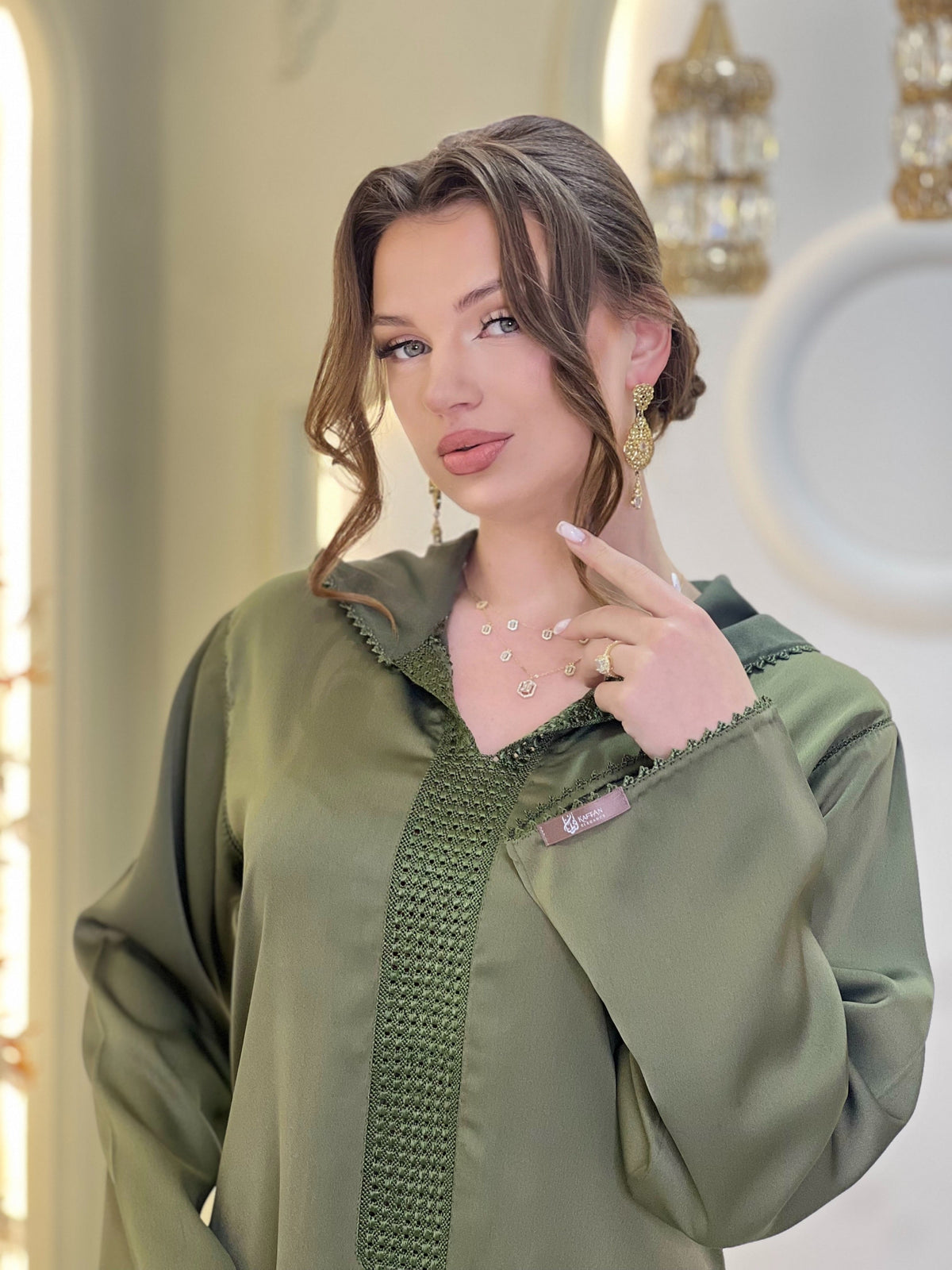
This is where the djellaba shines. With its long, straight silhouette and hood, it is the traditional Moroccan garment for going out, and it can be worn over simple clothes or a lighter kaftan underneath.

Our Jellaba Nacre has the soft, luminous tone that many people love for Eid morning, while the Jellaba Rina Black, in crepe, is a refined option that pairs easily with a coloured scarf.

Djellaba or kaftan: which one?
Both belong to Eid, and many families wear each at different moments of the day. The difference is mainly in the cut and the occasion:
- Djellaba: a hooded, straight garment traditionally worn outdoors. It is practical, modest and easy to move in, ideal for the prayer, visits and travelling between homes.
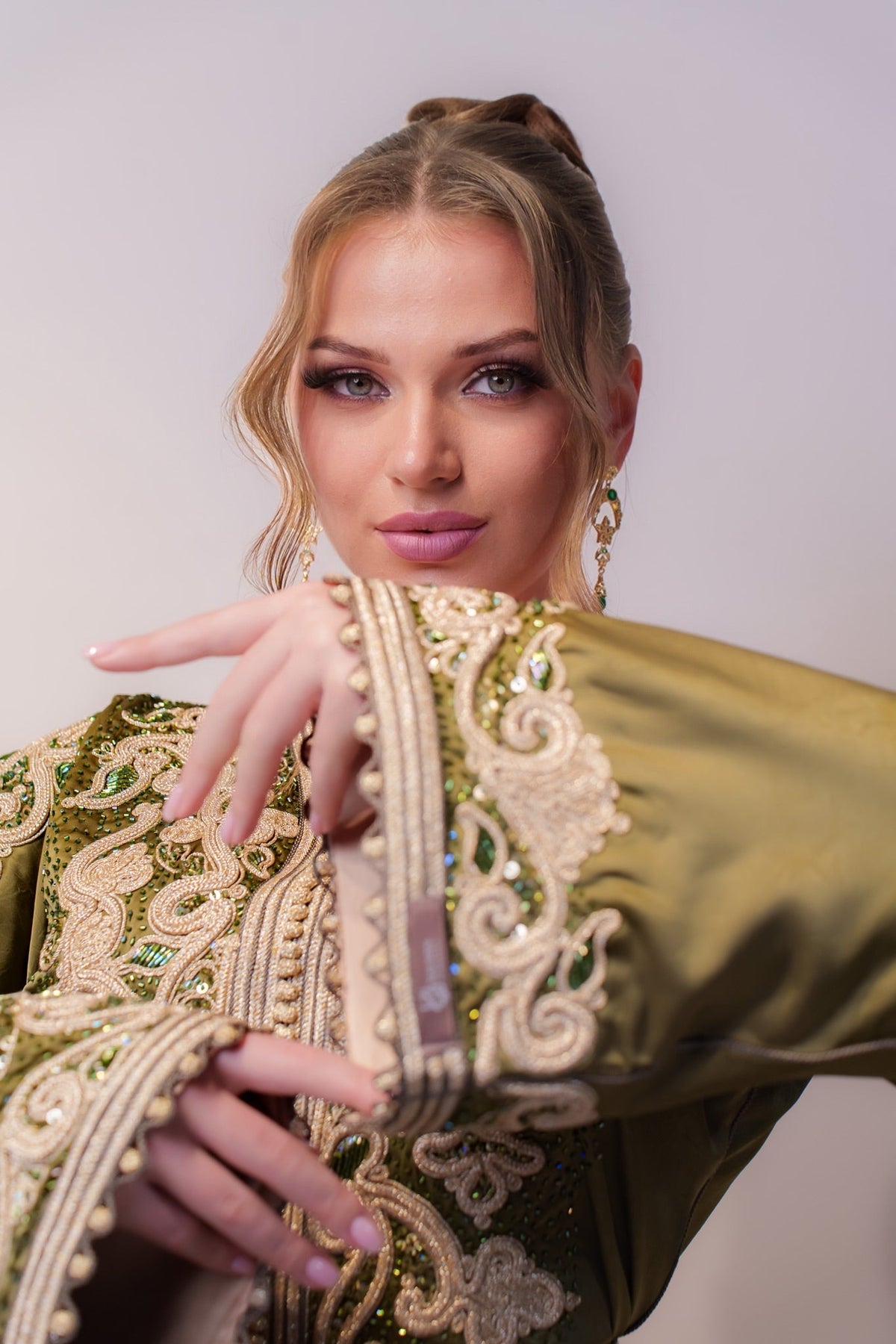
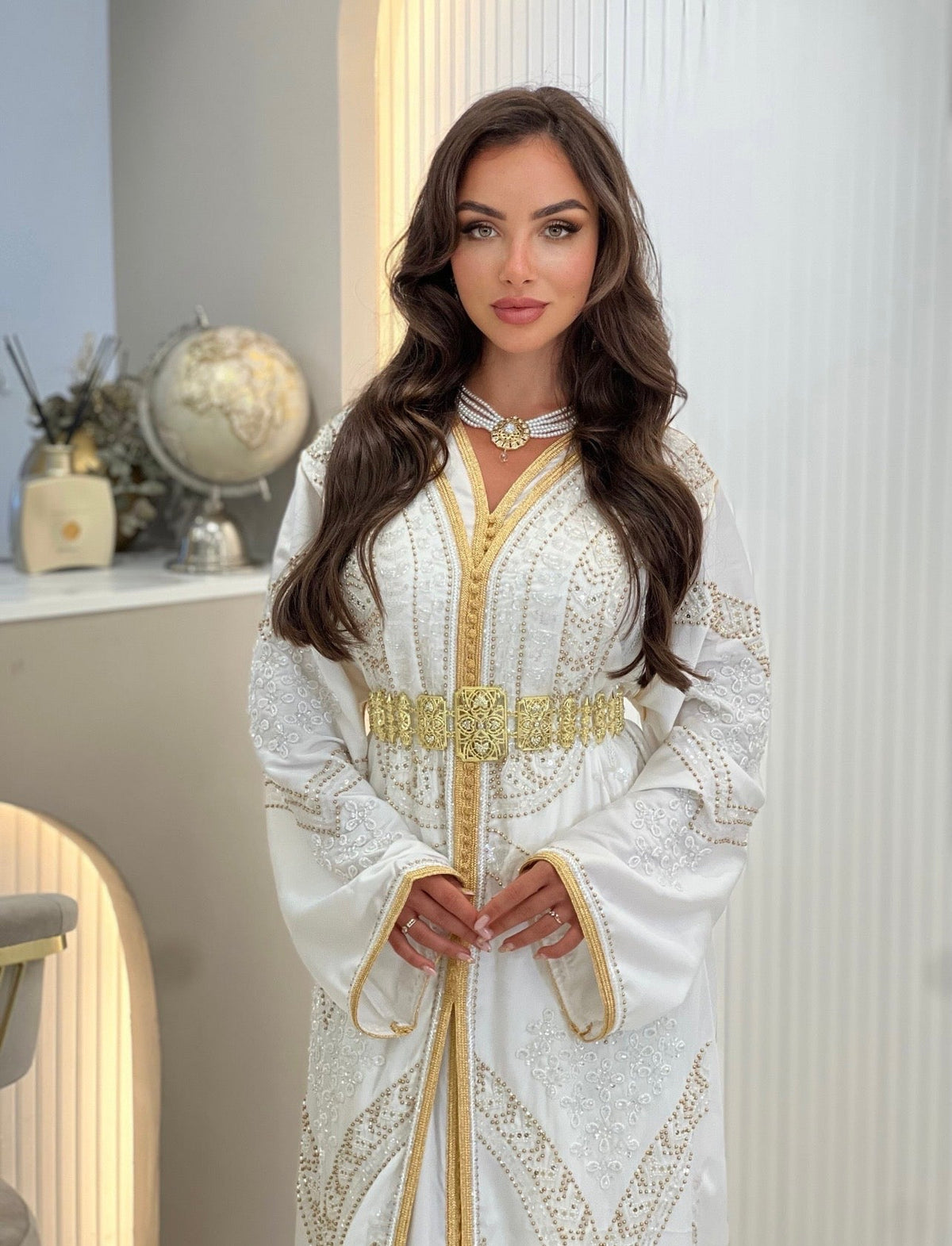
- Kaftan: a single-piece robe, usually worn indoors and at celebrations, often finished with a belt and traditional details such as sfifa braided trim and aakad knotted buttons. It feels more festive and is perfect for the family meal or an evening reception.
If you only want one piece, a dressy djellaba in a beautiful fabric can carry you from morning to night. If you enjoy changing, start in a djellaba and slip into a kaftan once you are home or at the main gathering.
Day versus evening
For daytime, soft and luminous shades such as ivory, pearl, sand, taupe, sage or pale blue feel fresh and festive. Crepe and light satin are comfortable for long hours and photograph well in natural light.
For the evening, you can go richer: deeper colours, more embroidery and a little more shine. Velvet is lovely when Eid falls in the cooler months, and drap de soie or satin bring a quiet glow under evening lights. The Jellaba Amara, in crepe, is a good example of a piece that works for both Eid and evening wear.

Getting the fit right
Comfort on Eid depends a lot on fit. Our sizing is based on the measurements of the garment itself, with underarm-to-underarm as the main reference. If you are between two sizes, choose the larger one: you will be sitting, eating and hugging all day. Most kaftans come with a matching belt that lets you define the waist without tightness. You will find every measurement in our size guide, and length can be adjusted free of charge if you add your height and usual shoe height in the order notes.
Order ahead of Eid
Eid dates follow the lunar calendar and can depend on the moon sighting, so it is wise not to leave your order until the last week. Orders are usually dispatched from our atelier in Tangier within 1 to 3 working days and travel by express carrier, but transit and customs times vary by country, and the weeks before Eid are a busy period for everyone. A few simple habits help:
- Choose your outfit several weeks before the expected date, especially if you are dressing the whole family.
- Many of our pieces are one-of-a-kind, so if you love a particular colour, do not wait too long.
- Add any length adjustment to the order notes at checkout so it is included from the start.
- If you have a question about sizing or timing, contact our team before you order.
Caring for your Eid outfit
After the celebrations, check the care label before cleaning. For embroidered, beaded or delicate fabrics we recommend professional dry cleaning, and storing the piece on a padded hanger or folded in its box, away from direct sunlight, so it is ready for the next Eid.
Eid is about gratitude, family and generosity, and what you wear should let you enjoy all of it with ease. Explore our Eid kaftans and our djellabas to find a piece that will become part of your family's memories.