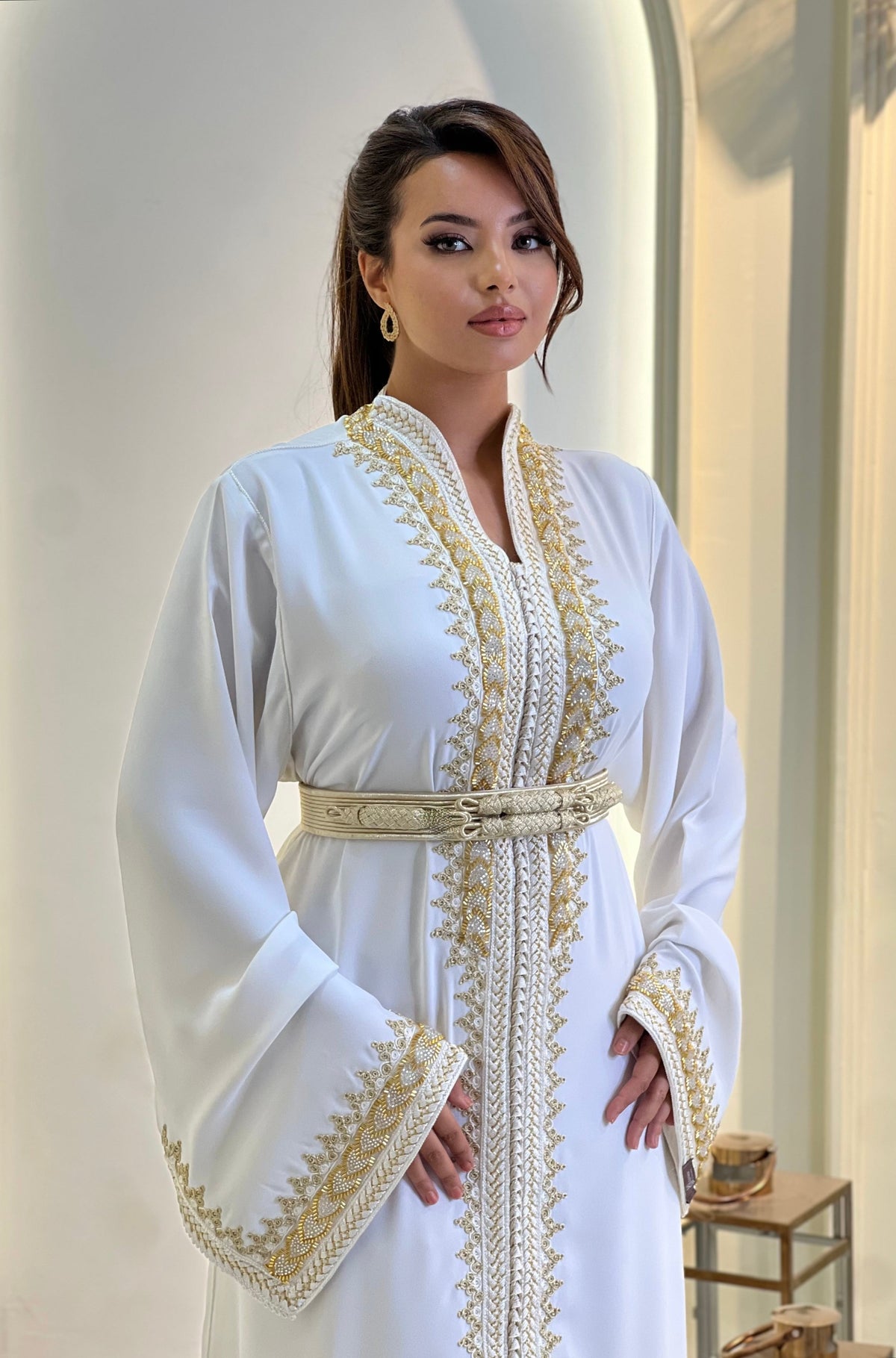
How to Care for an Embroidered Kaftan
An embroidered kaftan is best cared for gently: check the care label first, entrust any real cleaning to a professional dry cleaner, refresh it with steam rather than a hot iron, and store it in a breathable garment bag away from light. With a little attention, the hand embroidery, beadwork and trims stay as beautiful as the day the piece arrived.
Embroidered and beaded kaftans are made to be worn again and again, at weddings, Eid gatherings and family celebrations. Below you will find the simple habits that help protect them between occasions, and a few tips for travelling with yours.
Start with the care label
Every fabric behaves differently. Crepe, drap de soie, satin, velvet, organza, chiffon and tulle each react in their own way to water, heat and friction, and a single kaftan often combines several of them with metallic thread, crystals or sequins. The care label is always your first reference. If you are unsure about a particular piece, contact our team before trying anything at home.
Cleaning: why we recommend a professional
For embroidered and beaded pieces, we recommend professional dry cleaning. Hand embroidery, sfifa braiding, aakad knotted buttons and beadwork can loosen, pucker or lose their shine in a washing machine, and some decorative threads may not tolerate water at all.
- Choose a dry cleaner experienced with evening wear or bridal garments.
- Point out any stains and tell them what caused them, if you know.
- Ask them to protect heavily beaded or crystal areas during cleaning.
- Clean only when needed: frequent cleaning wears delicate fabrics faster than careful wear.
Spot care at home
If something spills during an event, act gently. Blot (never rub) with a clean, soft white cloth to lift as much as you can. Avoid stain removers and avoid soaking the area, especially near embroidery, as this can leave marks or affect the threads. Then take the kaftan to a professional as soon as possible and let them handle the rest.

Steam rather than iron
A hot iron pressed directly on embroidery or beadwork can flatten the work, melt sequins or mark delicate fabrics such as satin and velvet. A handheld steamer is usually a kinder option:
- Hang the kaftan and steam from a short distance, without touching the fabric.
- Steam from the inside where possible, particularly on velvet, so the pile is not crushed.
- Keep the steam away from crystals and glued embellishments.
- If the label allows ironing, use a low setting on the reverse side with a pressing cloth, never directly over embroidery.
Let the garment hang and dry completely before putting it away.
Storing your kaftan between occasions
Good storage does most of the work of keeping a kaftan beautiful.
- Use a breathable garment bag. Cotton or another breathable fabric lets air circulate. Plastic dry-cleaning covers can trap moisture, so remove them before long-term storage.
- Keep it dark, cool and dry. Sunlight can fade colours over time, and humidity is not kind to natural fibres.
- Give it space. A crowded wardrobe crushes embroidery and can catch beads on neighbouring garments.
Hanging or folding?
Lighter kaftans in crepe or chiffon can usually hang on a padded hanger. Heavily embroidered or beaded pieces, and many velvet kaftans, are a different matter: their weight can pull on the shoulders and stretch the fabric over time. For these, it is often wiser to fold them loosely and lay them flat in a box or drawer, with acid-free tissue paper between the folds and over the embellished areas. Refold along slightly different lines from time to time to avoid permanent creases.

Perfume, makeup and jewellery
Small habits on the day of the event make a real difference:
- Apply perfume, deodorant and hairspray before dressing, and let them dry. Perfume can stain silk and satin and may dull metallic threads.
- Put on makeup first and protect the neckline with a scarf as you slip the kaftan on.
- Take care with rings, bracelets and bag clasps, which can catch on embroidery and beadwork.
- Store the belt separately, wrapped in tissue, so its embellishments do not rub against the fabric.
Travelling with an embroidered kaftan
If you are wearing your kaftan at a wedding abroad or a family celebration in another city, a little planning protects it on the way:
- Carry it in your hand luggage in a breathable garment bag when you can, so it is not crushed in the hold.
- If it has to go in a suitcase, fold it loosely with tissue paper in each fold and place it on top of your other belongings.
- Turn heavily beaded areas inwards or cover them with tissue to prevent snagging.
- Pack the belt and any jewellery in separate pouches.
- On arrival, hang it up straight away and let any creases relax, then refresh it with a travel steamer if needed.
A piece to keep for years
A well-made kaftan is meant to accompany you through many celebrations, and sometimes to be passed on. Gentle cleaning, careful storage and a few precautions on the day are all it takes. If you have a question about a specific piece, our team is happy to help. And when you are ready for your next occasion, explore our kaftan collection.