Moroccan Kaftan Fabrics Explained: Velvet, Crepe, Drap de Soie, Brocade and More
The fabric decides almost everything about a Moroccan kaftan: how it falls, how it catches the light, which season it suits and which embroidery it can carry. In short, choose velvet for winter evenings, crepe for comfort in any season, drap de soie or satin for ceremonial sheen, brocade for pattern woven into the cloth itself, and sheer fabrics such as organza, tulle and chiffon for light, layered looks.
Here is how each fabric in our catalogue behaves, so you can choose with confidence.
Velvet: depth, warmth and evening drama
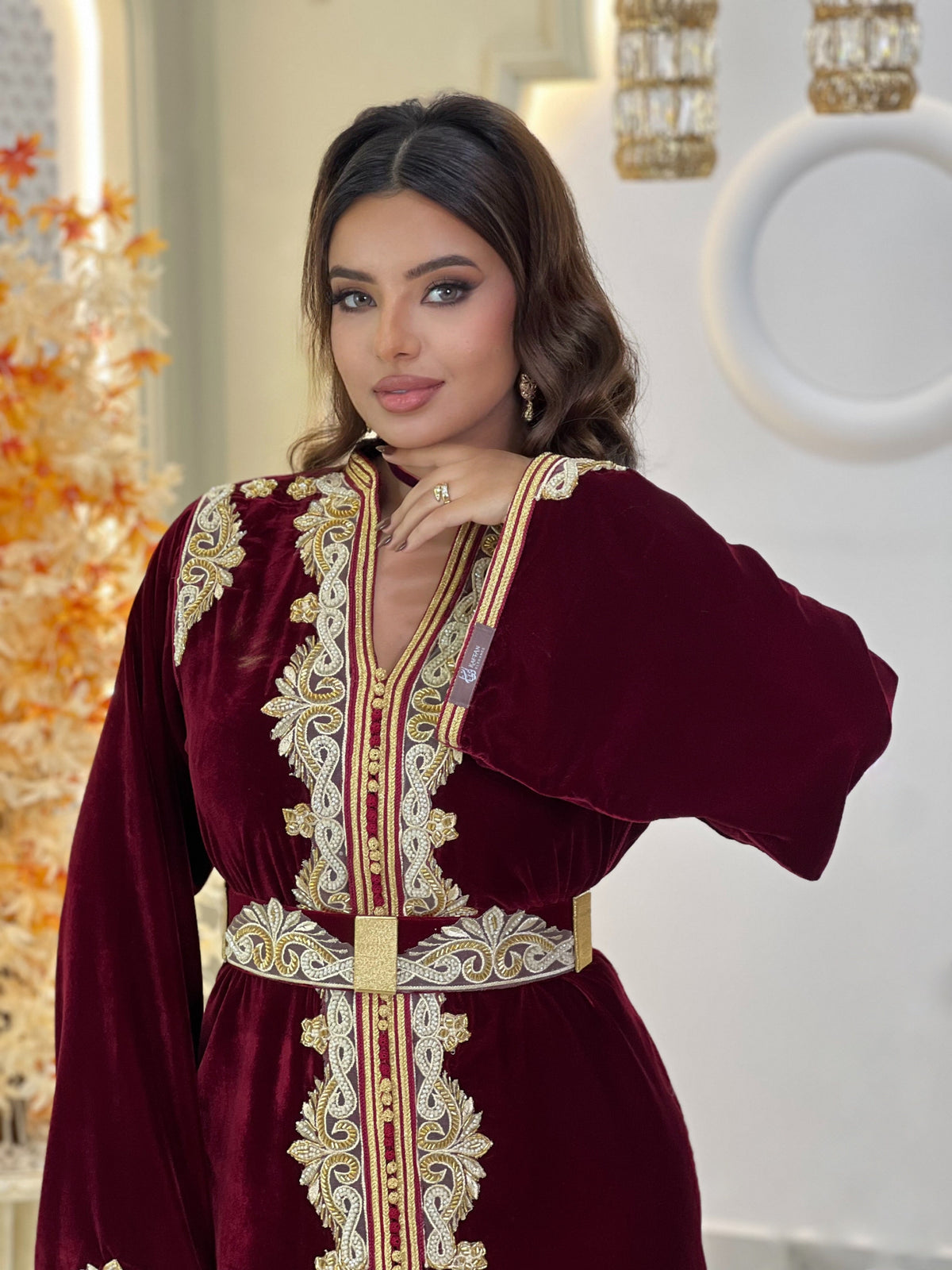
Velvet has a short, dense pile that absorbs light and gives colour a remarkable depth. Burgundy, emerald, royal blue and black look especially rich in it. It is a heavier fabric, so it drapes in soft, weighty folds and keeps you warm, which makes it a natural choice for autumn and winter celebrations, evening receptions and Eid when it falls in the colder months.
Velvet pairs beautifully with gold embroidery, sfifa braided trim and aakad knotted buttons: the metallic thread stands out sharply against the matte pile. Pieces such as Kovas, Samar, Jumanah and the gold-embroidered lebsa Orlissa Brown show how much presence velvet brings. You will find them all in our velvet kaftans collection.

Crepe: fluid, matte and easy to wear
Crepe has a fine, slightly grainy surface and a matte finish. It flows close to the body without clinging and moves well when you walk or sit, so it is one of the most comfortable fabrics for a long celebration. Because it is lighter than velvet, it works across seasons, from spring weddings to Eid gatherings.
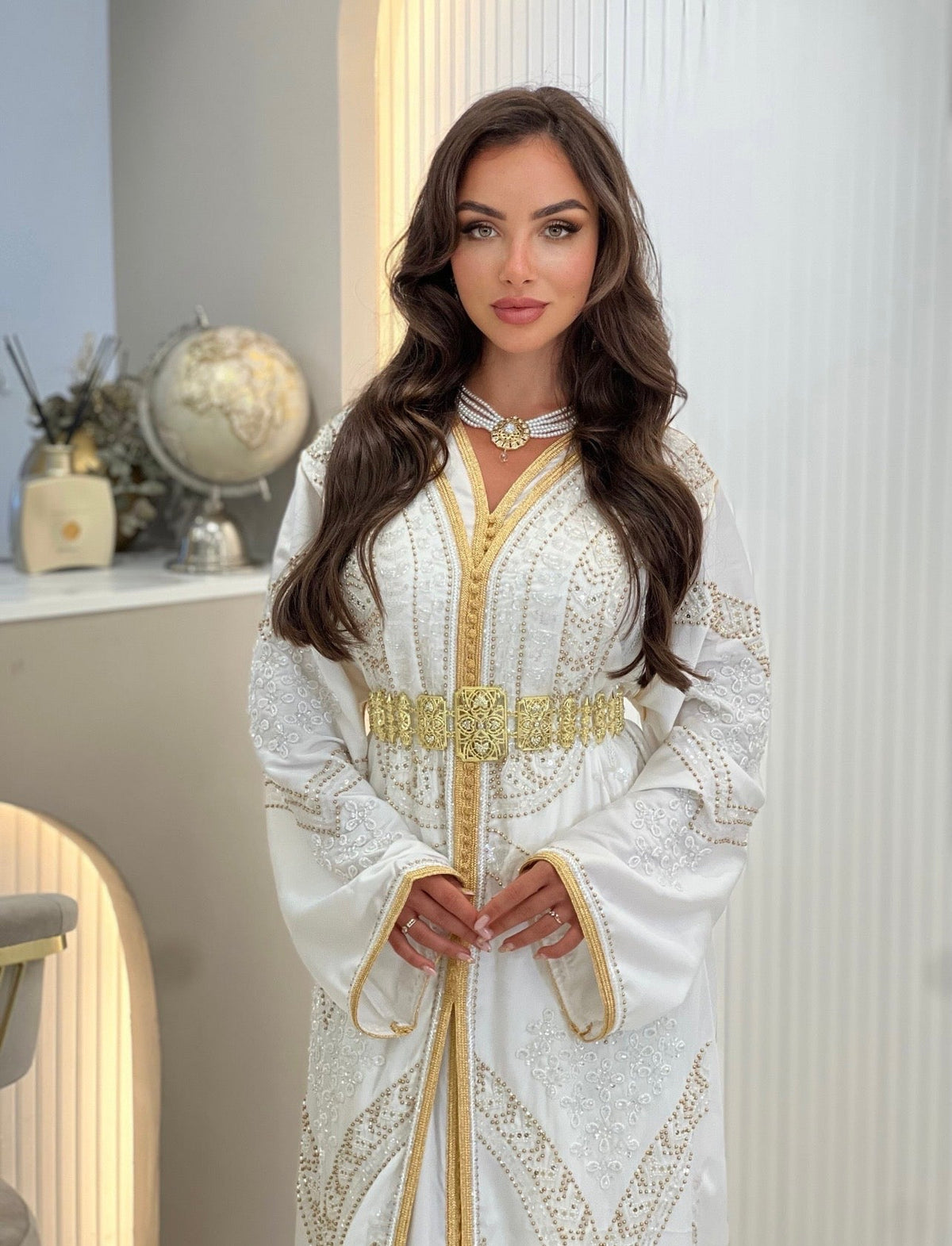
Its calm surface is an ideal canvas for hand embroidery, beadwork and crystals, which read clearly against it. Look at Caftan Hind, available in many colours, or one-of-a-kind pieces such as Laleh and the Exclusive Takchita Adila.
Drap de soie: structure with a soft sheen
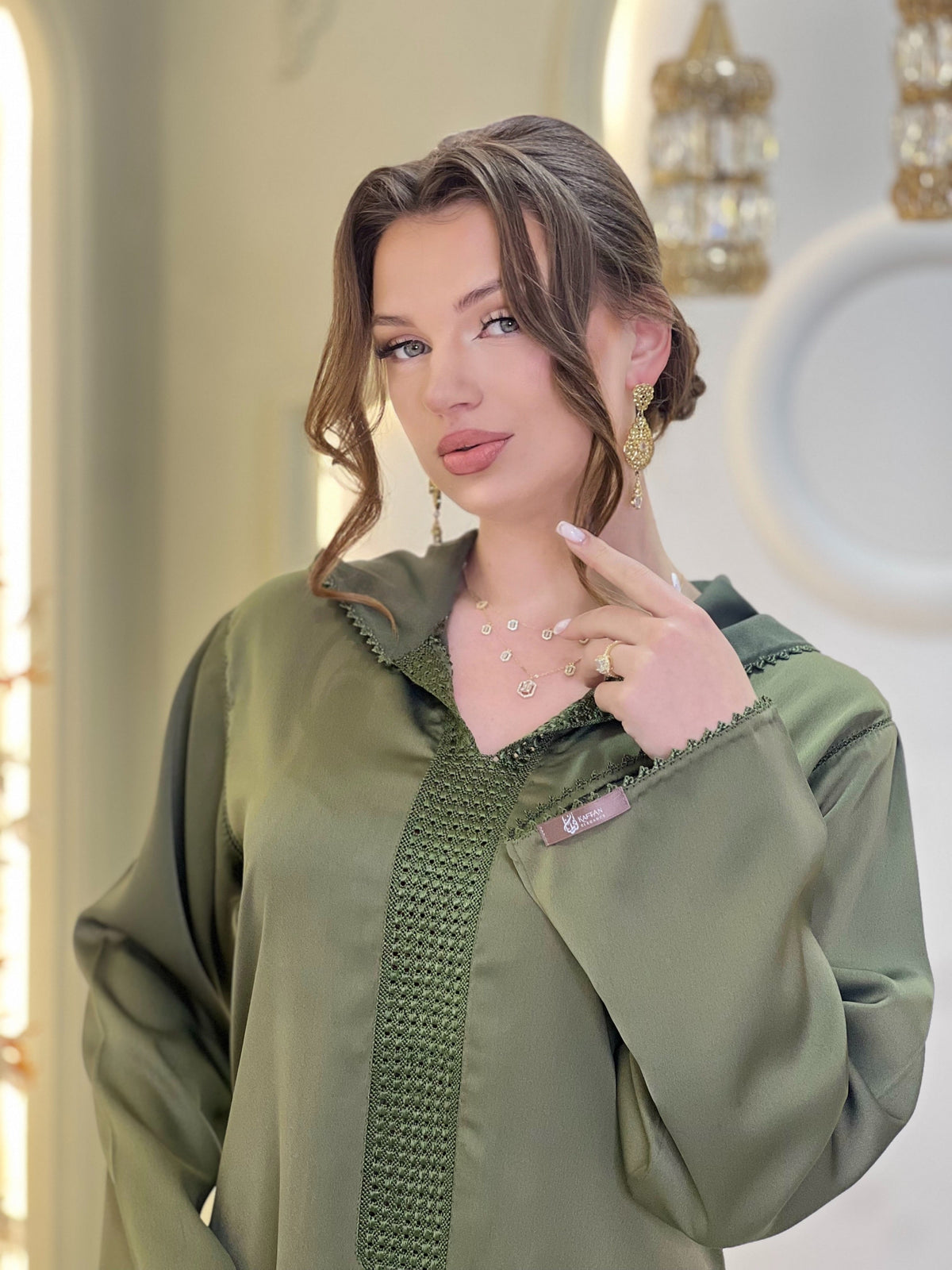
Drap de soie is a smooth, satin-faced fabric with more body than crepe. It holds its shape, so skirts fall in clean, sculpted lines and the silhouette stays crisp throughout the evening. Its gentle sheen photographs well, which is one reason it is so often chosen for weddings and engagement celebrations.
Drap de soie supports richer decoration: dense embroidery, sfifa along the opening and rows of aakad buttons. Shailene Olive and the Exclusive Lebsa Munia are good examples, and Rimas White combines drap de soie with crepe.

Satin and silk: luminous and refined
Satin has a brighter, more reflective surface than drap de soie and a smooth, liquid drape. It suits evening events and weddings, and it looks elegant with restrained embroidery or crystals, as in Lebsa Maha. Silk, used on its own or in combination, gives a light, refined hand and a natural lustre. Satin and silk can show marks more easily, so they deserve careful handling.
Brocade: pattern woven into the cloth
Brocade carries its motif in the weave itself, often with metallic threads. Because the fabric is already decorated, it usually needs little added embroidery; a simple sfifa trim and a matching belt are often enough. It is stiffer and more formal, so it suits ceremonial occasions and cooler seasons rather than long summer days.
Organza, tulle and chiffon: light and layered
These sheer fabrics are most often used as an overlayer, for instance the dfina of a takchita worn over a tahtiya underdress. They add movement and lightness without weight.
- Organza is crisp and slightly stiff, so it holds volume. See Kylie, which pairs organza with silk.
- Tulle is a fine net that works well with sequins and beadwork, as in Lebsa Elena (crepe and tulle).
- Chiffon is soft and floaty, ideal for warm-weather events.
Lace appears as an accent or overlay, adding texture to sleeves and bodices.

Matching fabric to season and occasion
- Winter evening, Eid in cold weather: velvet, brocade.
- Wedding or engagement: drap de soie, satin, organza layers.
- Long celebration, all seasons: crepe.
- Summer events: crepe, chiffon, tulle.
Embroidery and fabric: a quick guide
Heavier fabrics such as velvet and drap de soie can carry dense gold embroidery and heavier beadwork without pulling. Lighter fabrics such as crepe and tulle suit finer hand embroidery, crystals and sequin work, including Mozouna sequin embroidery. Brocade needs the least added decoration.
Caring for your kaftan
Embellished pieces need gentle care whatever the fabric. We recommend professional dry cleaning and always checking the care label. Store your kaftan on a padded hanger or folded in its box, away from direct sunlight, and keep velvet from being crushed for long periods.
If you already know the mood you want, begin with our velvet kaftans for winter evenings, or explore the full kaftan collection to compare fabrics side by side.